Democracy, Six Years Later
a conversation with composer Robert Maggio
by Matthew Brown, 2026 summer associate @ The Crossing
In June, The Crossing joined ArtPhilly to mark America 250 with two special programs. United by the theme of “Building a Contemporary Canon”, both programs pulled from The Crossing’s body of commissions from the past twenty years. The first, “The Laws of Nature and of Nature's God: The People Address the Nation’s Issues (The Society, The Environment, The Displaced)”, centered on works with a social justice mission. The second, “Life, liberty, pursuit of happiness: The People Speak from the Birthplace of America (Philadelphia Composers Ask Questions)”, was a showcase of local composers and a celebration of the vibrant arts community The Crossing calls home. In the spirit of asking questions, I sat down with composer Robert Maggio to learn more about his 2020 work “Democracy” which closed the second program. This piece sets the words of President Franklin D. Roosevelt from a 1940 fireside chat. We discussed the work’s unique beginnings, Rob’s perspective after six years, and The Crossing’s journalistic approach to storytelling.
* * *
This piece was written at a very specific time in 2020.
What did Donald ask for when he came to you about doing a piece?
Well, I think I knew that it was for The Crossing Votes...So this was not a one-off, right? This is not a one of one.
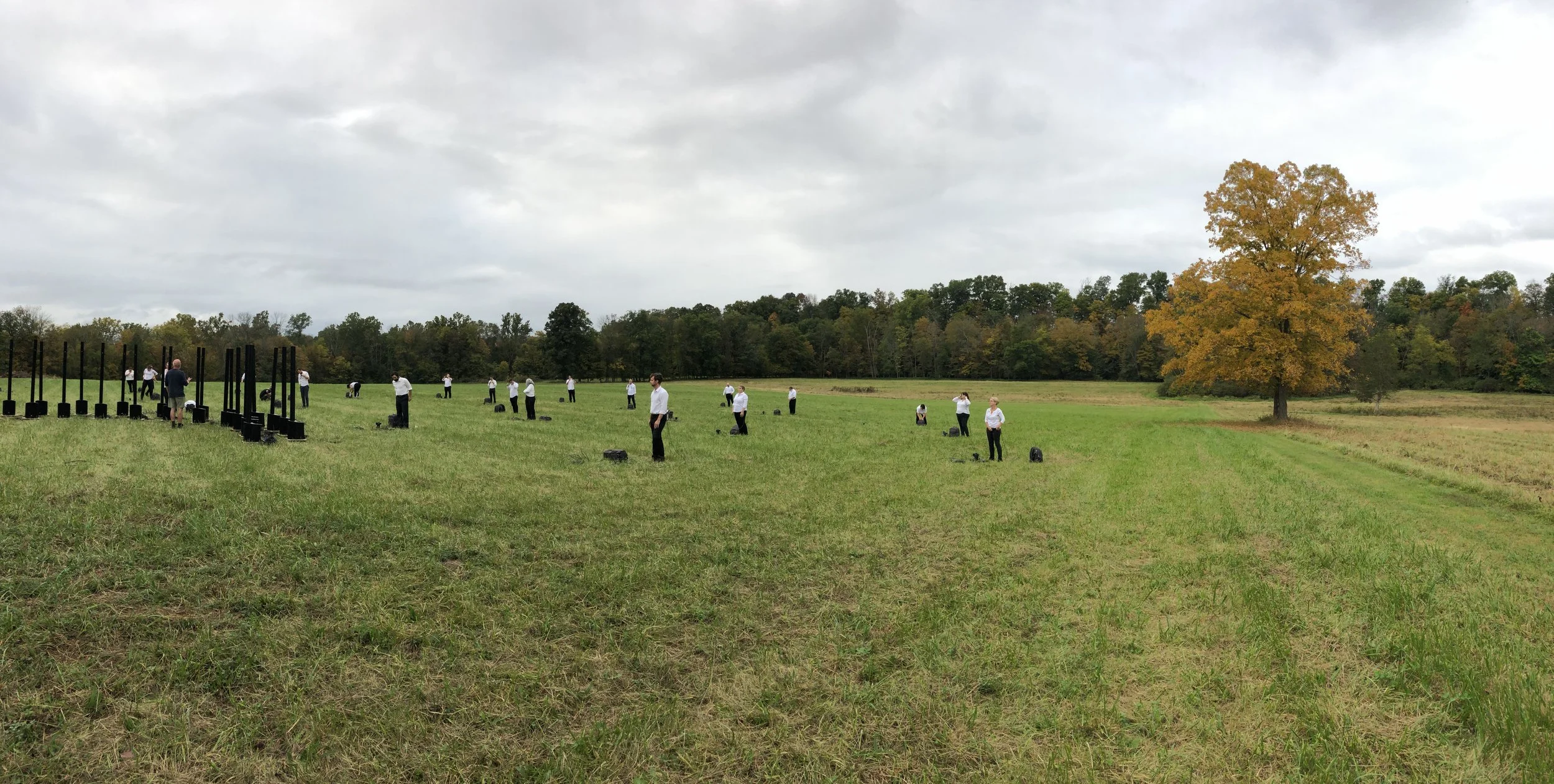
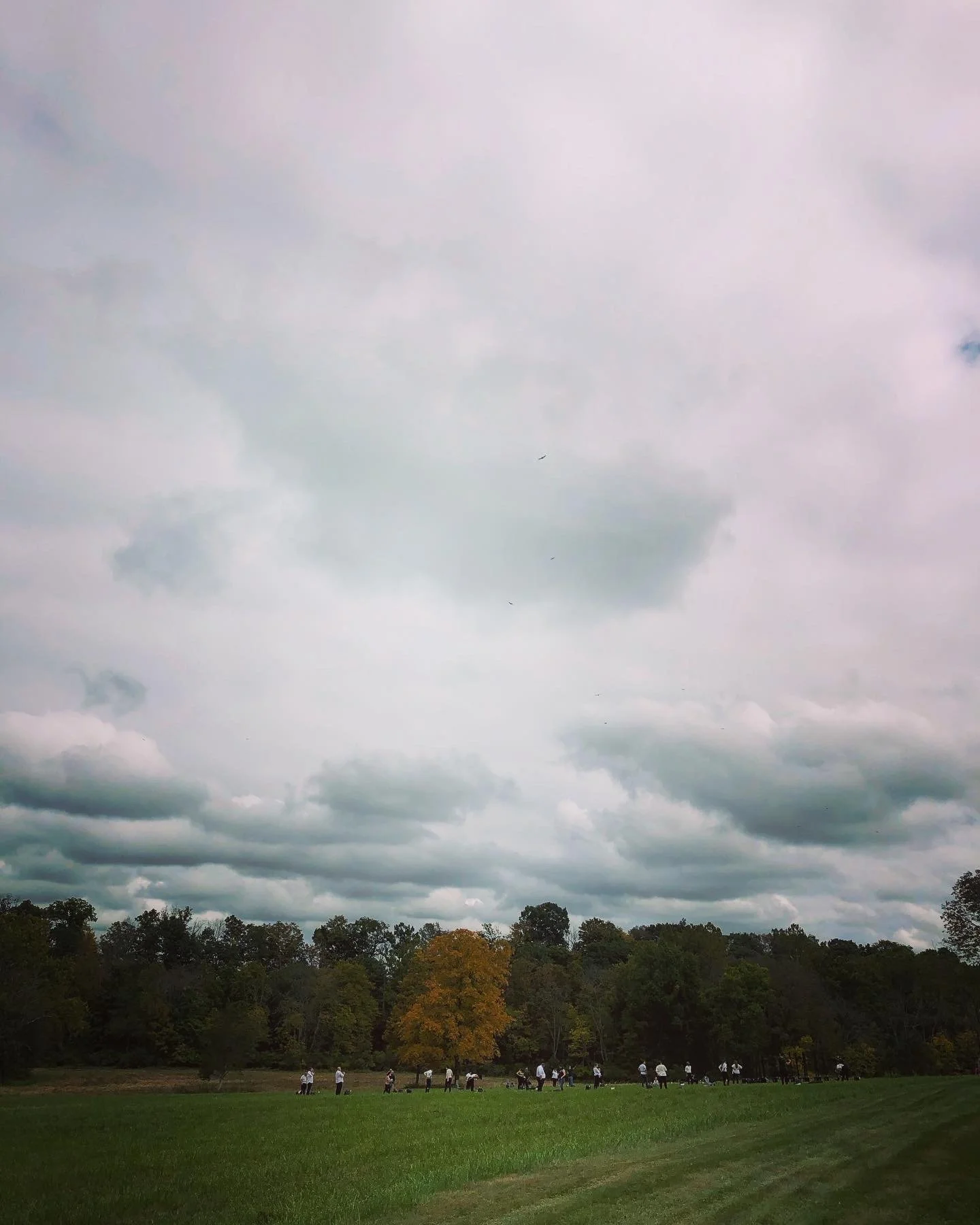
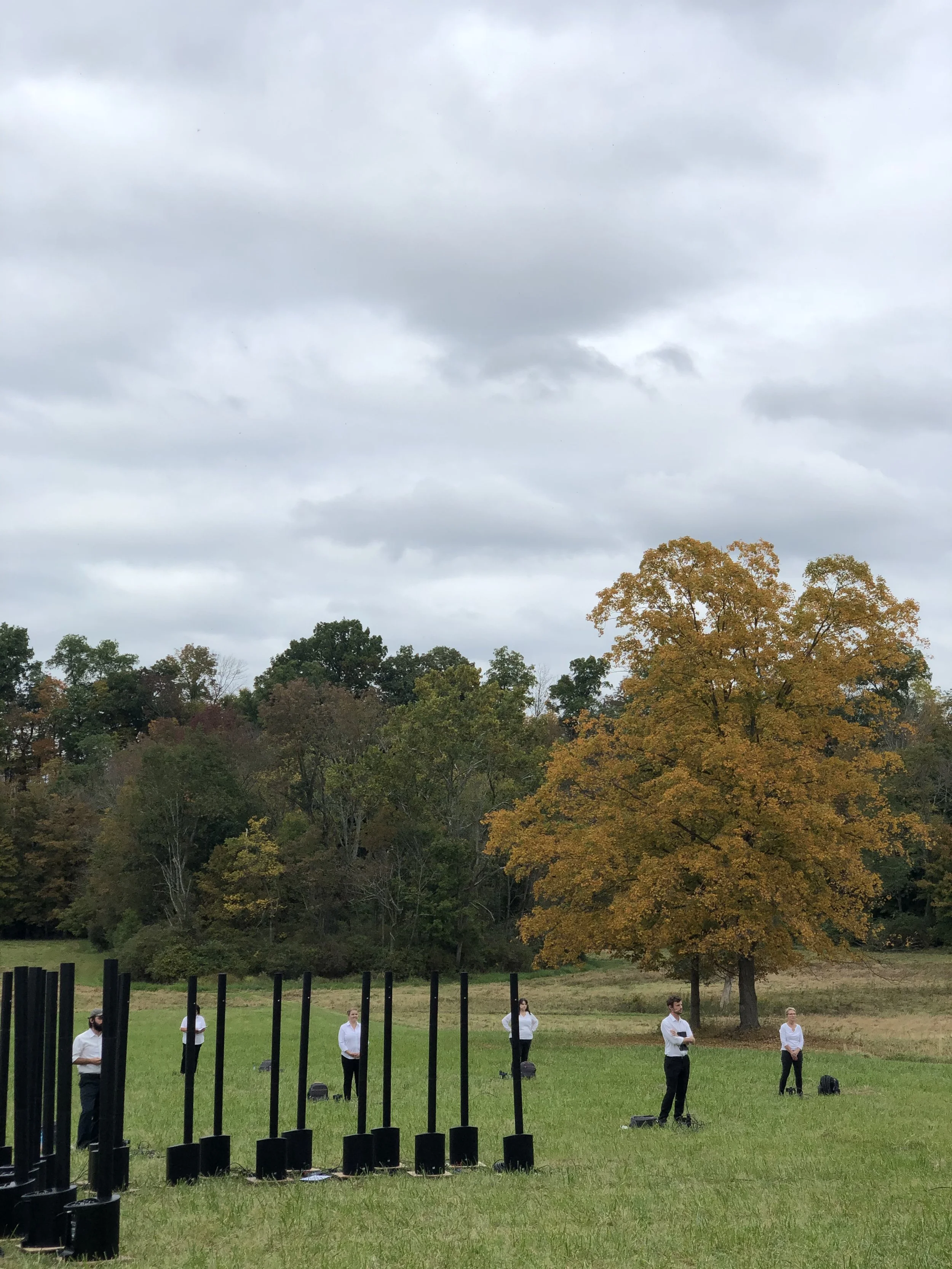
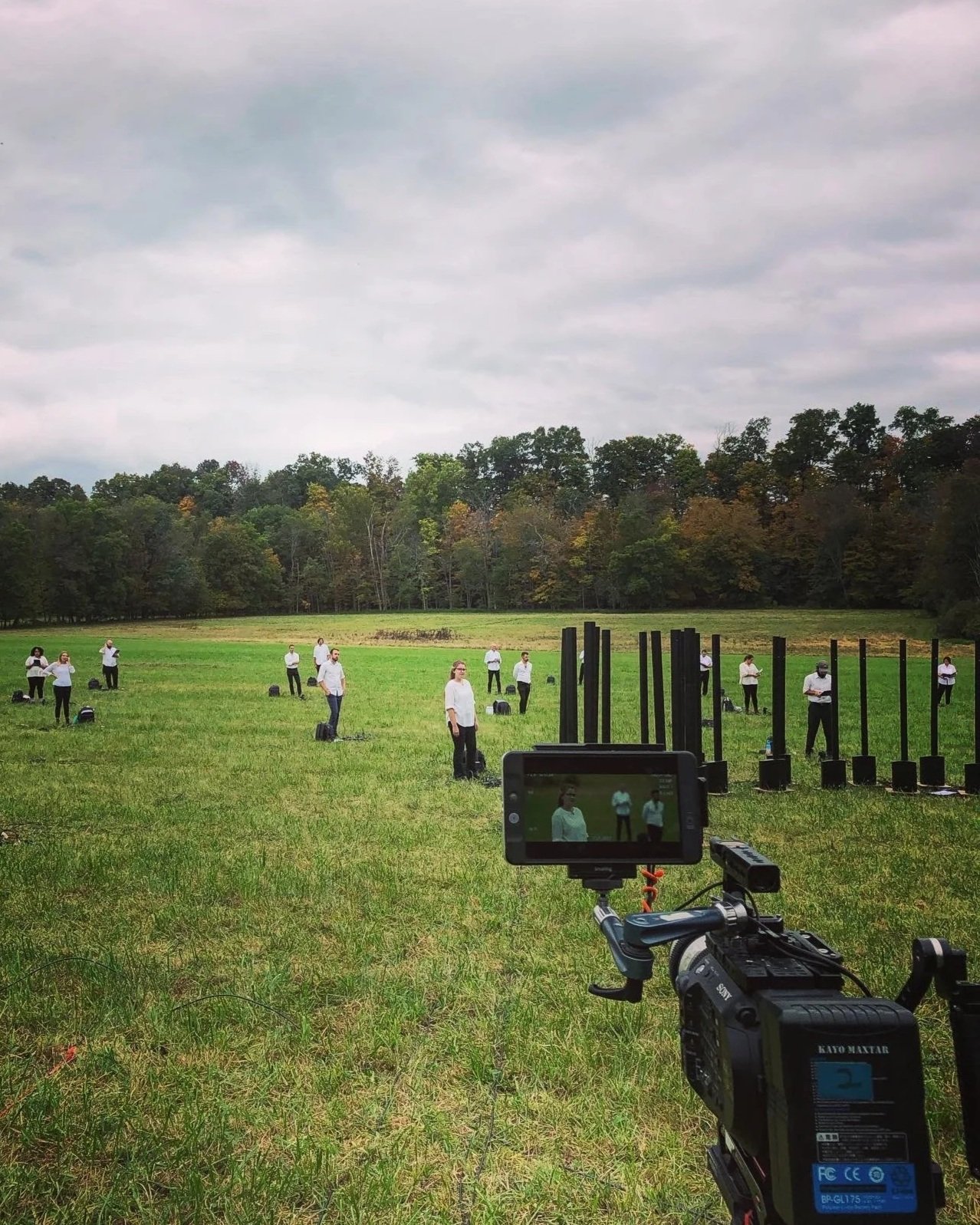
It was written in 2020, so COVID was happening. We were all in lockdown, and the recording was done in a field…They were together and they had head pieces on. And I think they could kind of hear each other. I certainly couldn't hear the piece…I mean, I was hearing it across the field.
I was just listening to it again on the walk over. It sounds really good, actually. I'm shocked at how good that sounds based on the way it was performed.
They memorized it. So [Donald] must have said it needs to be memorizable, but then I had written on ANIARA for them a few years before that, and that was like 90 minutes to memorize, and so they can memorize…
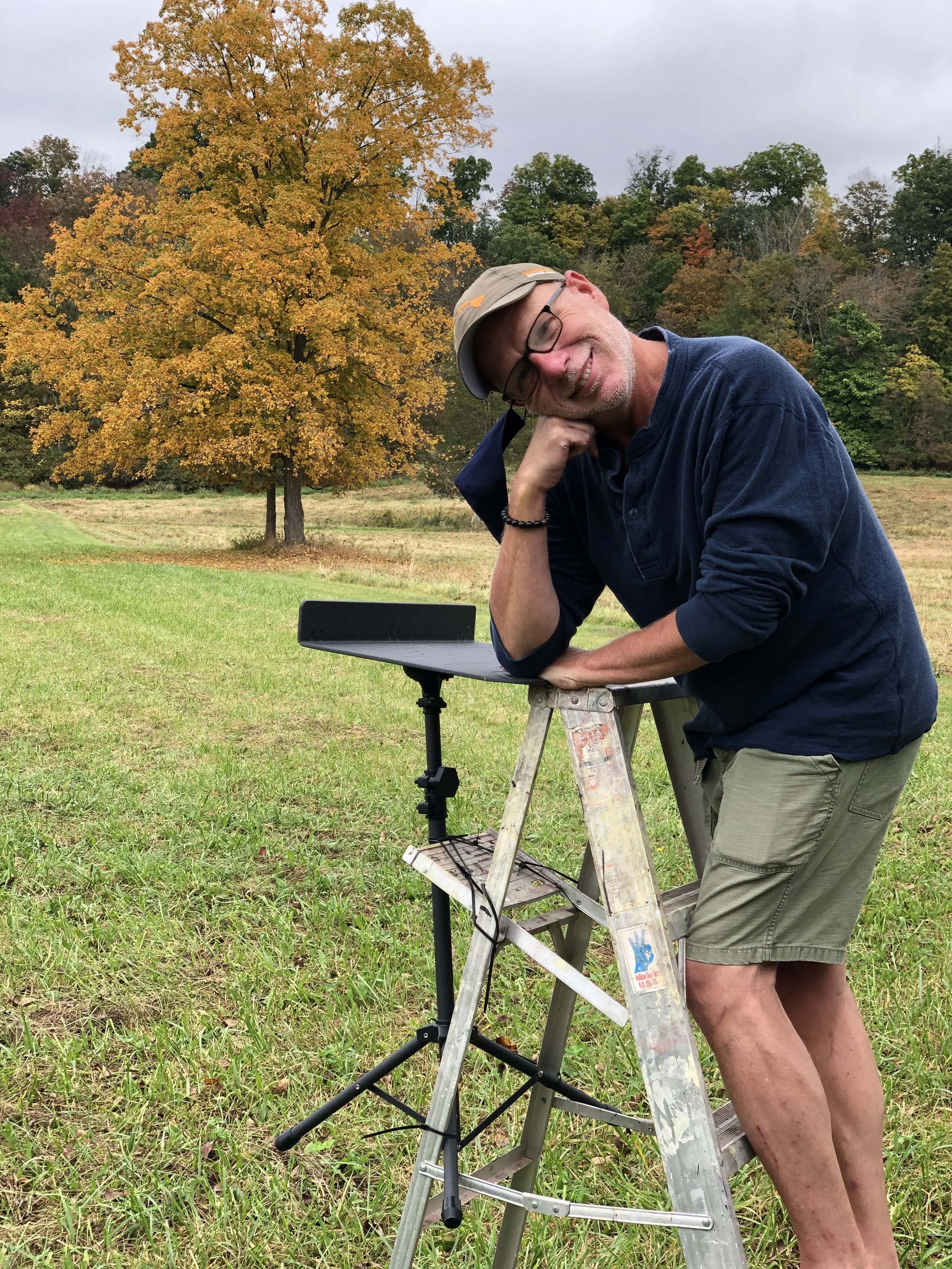
Donald is pretty forthcoming about the kind of stuff he wants for text. And I really appreciate that too, because he kind of takes away that really lengthy process of finding texts…
It's funny, before that I had sent him a piece of music called “Lies”, which I had written with a playwright friend of mine, Michael Hollinger, and it was all about lies in the private and public sphere. And it's full of irony and satire and at times heartfelt gushiness. And the FDR is the opposite of that. The FDR is not ironic. It's not satirical. It's not gushy. It's straight up aspirational. Here's who we can be. Here's what I think we are, as Americans. Here's who I am as the leader of your country, of you as people, right? So I appreciate that. I appreciate Donald saying, “Here, this fireside chat. What do you think of this?” And he didn't say what part of it. He just said this.
So I listened to an old recording of it. I got a transcript, and then I started doing that blackout poetry thing. And started crossing things out and circling things, and finding text within that crazy long thing, which in and of itself is a complete piece. The FDR speech, the fireside chat, it's its own song. It's its own composition. So I couldn't just do all of that stuff. It had to be refined and distilled,
And there was Whitman in it, you know, the opening of it, “My friends,” and then he starts talking about the farmer and all of it.
I hear America singing…
It was totally that, which I have set to music. And so I was like, “Oh my God, it's sort of like Whitman, so I know how this goes.” And that will invoke the sounds of America that we've learned through the American School of Composers. So all of that stuff started falling into place.
My background as a theater composer and musical dramatist starts kicking in, and I start seeing the space. And so actually, them singing in a field was kind of perfect, and that video was perfect. It's like they grew out of the land. There's that very appropriate visual of them standing in a field singing about what this country is, the actual roots of the country itself, the earth.
So anyway, that's where that whole prompt began, and the prompt with Donald is always a bunch of emails back and forth, and “what do you think of this?” And he's always right on. He's always got his finger right on the pulse of it, so I'm grateful for that.
How did the technological circumstances influence your creative decisions, if at all?
I am sure that Donald told me that it probably should be something that people standing in a field really far apart, memorized, could do. And I'm sure that on some level, I thought, okay, maybe not tons of really complicated rhythmic counterpoint. Where people have to hear a split second what's happening. I'm pretty sure the only thing that I was really cautious about was rhythmic intricacy.
Even just the opening words of the piece, “my friends" repeats for a long time in the choir as the soloists begin. What do those words mean to you as you're repeating them?
Yeah, because it's a nice sonority, right? It's very sweet, soft, enveloping, comforting. It's a place like, “I could hang out here. This feels good. I want to be here.”...When he's talking to us, it's as though he's planting a seed, right? He's planting the seed, “my friends.” And then that just, like a ripple, just continues…And I think that's part of what leadership and modeling, good nurturing leadership is, it’s sewing those seeds to make people trust and feel comfortable. So that's what that sound is.
It's a bed on which we can build. Then individual lines and melodies can flow and soar over that because it's solid. It's a place of comfort. It’s a place of respite.
It's the fundamental understanding needed for any of those other aspirations to take root.
Exactly right. It's the bed…It's the bed in which the flowers grow, and there's all kinds of flowers.
The piece appears to me to have four main sections, where there's the exposition delivered by the soloists over the “my friends.” There's the more declamatory middle section—that's the “frankly and definitely, there is danger ahead.” Then there's a bit of a hymn. “I would ask no one to defend a democracy that did not defend everyone.” And then the final parting idea is, “We must be the great arsenal of democracy.” I know you pulled these things from a much broader text, but I'm curious how you went about internalizing its rhetorical energy and deciding where those pivots should be?
So much of that is feel, right? So much of that is dramatic feel. I probably had a time limit…I'm assuming that I was told how long it should be. I don't recall exactly, is it six minutes? Is it five minutes? He probably said somewhere in that ballpark. And I think if I say to myself, there are four beats in this, and one is this sense of the soloists, we paint a picture of what America is, what these voices are, who this diverse population is…But you know what? There's some clouds rolling in, and there's some issues here, so the ground that we're standing on isn't as secure as you might think…So we should look out for that, because let me tell you why, if it's not everybody, if it's not for everyone, it's not correct. This has to be correct, right? And then…coming back to that coda at the end saying, we must be, and casting doubt on that.
Everyone always says democracy is an experiment. That's my favorite sort of thought. This is an experiment. It's not guaranteed, right? We’ve heard politician after politician tell us that this is fragile, this ecosystem. We can ruin it. The seams can be destroyed. So that's why this piece kind of goes where it goes, and we don't need a lot of that…There's three statements, right? Three is a magic number compositionally.
And the third one is just, “we must be.”
Exactly. By the third one, you're like, “You decide. You tell me where this goes.” And I loved how visually that’s just a fade out. But yeah, I think the timing is intuitive. And I think that Donald gave me the size of the canvas, and I knew that I wanted those four beats, and I had to figure out how to pace that so that it felt satisfying. And it felt like one thing.
When you reference the Whitman idea of American singing, that's why I love that “I would ask no one…”. It does sound like something that any community could sing. It's a very singable tune.
Absolutely. There was a real forethought there, like this needs to be if you will, populous. The vox populi. This is the voice of the people. We can all sing along with this to some extent. And then it gets weird and crunchy at the end. Weird and disturbing. (laughs)
The Crossing is invested in journalistic storytelling in that they don't want to tell people how they should act or how they should feel about contemporary issues, even though they have a very socially conscious body of commissions…How do you find fitting into that, especially with a piece with a political content in some way?
…I'm honored to be involved in that because as an artist, the work starts to feel relevant if it is related to something journalistic. I can highlight information. This is factual. This is what he said. I'm just telling you what he said…Singing it. And because we’re adding harmony and rhythm and all of this stuff, I can highlight it in different ways, different colors, but I'm not dictating what that message is. So I think it's a really cool opportunity to report on the world as it is in the way I see it. It's impossible not to feel like you're commenting on it. I have an opinion about it. But I also like that it asks questions, right? I think that these pieces of music should ask questions and shouldn't tell us necessarily how we should feel about things. It's kind of fun that way. They should make us sometimes feel uncomfortable. I like that about it.
Six years have passed since you wrote and they premiered this piece. How has your relationship with the subject, the text, the music—how has that shifted?
…I don't love every piece that I've written six years later, but I really like this one. I'm happy for it. I feel like it's concise. I think it's got a strong message. I feel like it asks good questions. I feel like it feels timeless unfortunately, or fortunately, you know…if democracy itself is some kind of experiment, and if it's a fragile thing, then cool. Let's keep reflecting on it. Right?
My husband and I were talking about this in the car ride home…the people who have all the money these days, the billionaires, the trillionaires, are they basically just buying the nation, in a sense? By deciding what news we get to watch and what kind of food we get to eat and what kind of schools we get to send our children to? And I mean, you could see it that way, and yet at the same time, you have all these individual voices, and I'm loving that. Loving the fact that no, actually, there are these little individual voices. There are these people. And while you can look at us as pieces to be moved around a chessboard…the people have a say in that. They can show up and protest…A piece like this kind of reminds me of that.
It's got all the singular voices rising from across the field, right?
Yeah, across the field. And that, to me, is extremely hopful…We have to thank Uncle Walt [Whitman] for that vision of America, because I think that he really reminded us through the Civil War, “This is not just this army and this army. These are people. These are very individual people with very individualized perspectives on humanity.” And with the 250th anniversary of the signing of the Declaration of Independence, it’s been a great reminder of where this country came from.
_
photos by Kevin Vondrak